
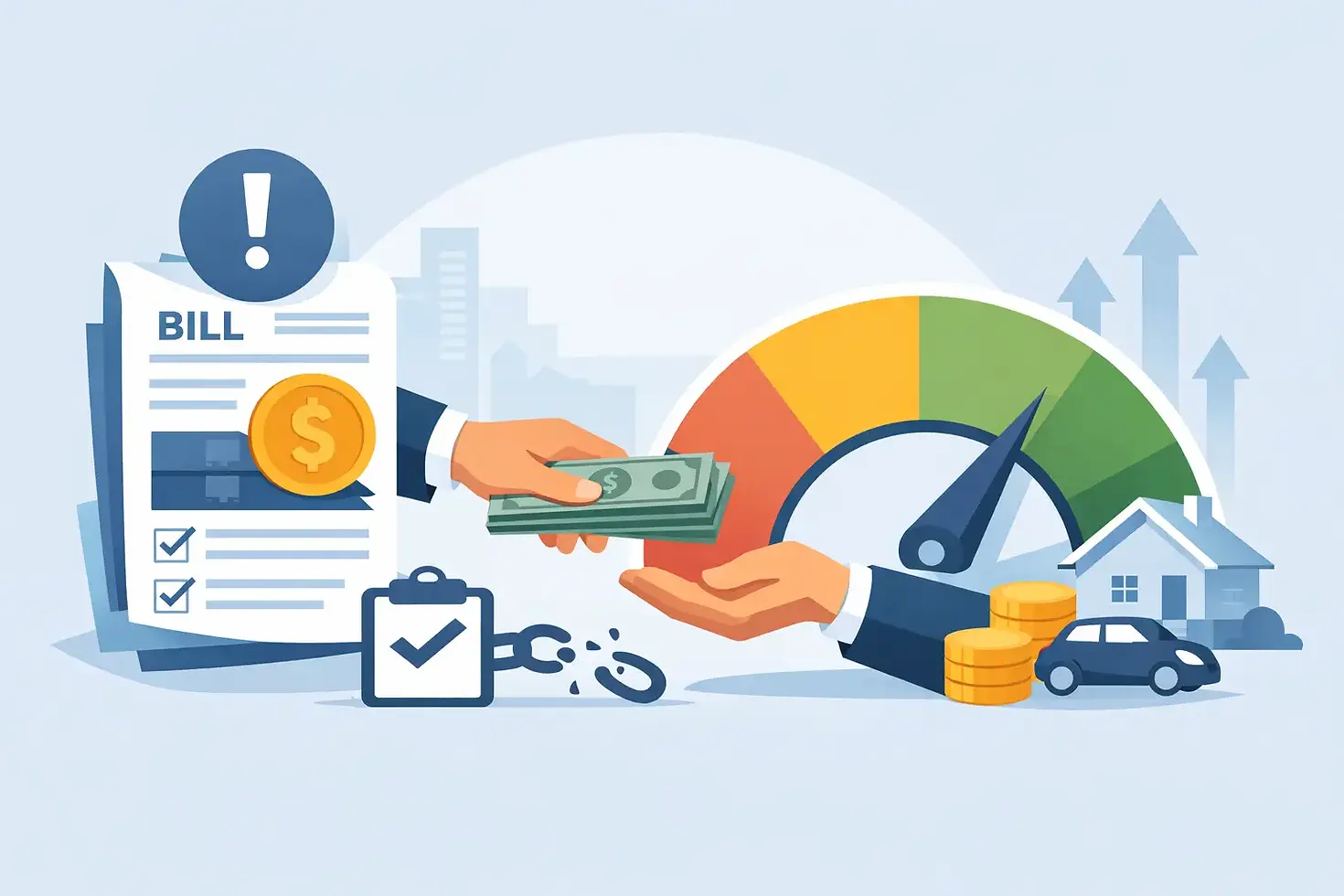
Does Paying Collections Improve Credit?
A lot of people find out they have a collection account right when they are trying to rent an apartment, buy a car, or qualify for a mortgage. That is usually when the big question hits - does paying collections improve credit? The honest answer is yes sometimes, no sometimes, and the difference depends on the credit scoring model, the age of the debt, and what your full credit file looks like.
Does Paying Collections Improve Credit Right Away?
Sometimes it does. Sometimes it does nothing at all. That is the part people do not like hearing, but it is the truth.
Older scoring models often treated paid collections and unpaid collections almost the same. In those models, the damage came from the fact that a collection was on your report in the first place. Paying it might stop further risk with the collector, but your score might not jump much just because the balance changed to zero.
Newer scoring models can be more forgiving. Some ignore paid collection accounts entirely, especially certain medical collections. In that case, paying a collection can absolutely help your score because a paid collection may carry less weight or no weight under that model. But lenders do not all use the same scoring model. That is why one person pays a collection and sees progress, while another person sees almost no score movement.
So if you are asking whether paying collections improves credit, the better question is this: which score are you trying to improve, and for what purpose?
The Real Benefit of Paying Collections
Even when your score does not shoot up, paying collections can still help your financial position.
First, it removes an active debt problem. That matters because unpaid collections can lead to more calls, more letters, possible legal action, and more stress. Second, some lenders manually review credit reports. A lender may look more favorably at a paid collection than an unpaid one, even if the score itself barely changes. Third, some mortgage lenders and underwriting programs care about whether collections are still owed.
That means paying a collection is not only about points. It is also about risk, approval odds, and cleaning up what lenders see when they review your file.
When Paying Collections Helps the Most
There are a few situations where paying a collection is more likely to work in your favor.
If the account is recent
A recent collection usually hurts more than an old one. If the account just hit your report, it can drag your score down harder because recent negative activity signals fresh risk. Paying it will not erase that history, but it may reduce some of the damage over time, especially under newer scoring systems.
If you are preparing for a major loan
If you plan to apply for a mortgage or auto loan soon, unpaid collections can become a problem beyond your score. Some lenders want them resolved before closing. In that situation, paying collections may improve your approval path even if the score change is small.
If the lender uses a scoring model that ignores paid collections
This is where strategy matters. If the lender uses a model that treats paid collections better than unpaid ones, then paying can help more directly. Not every lender tells you exactly which model they use, but knowing this difference keeps you from expecting one universal result.
When Paying Collections May Not Improve Your Score Much
This is the part many people miss.
If the collection is already several years old, the scoring impact may have faded some. The account can still look bad, but its effect is usually less severe than when it first appeared. In that case, paying it may be the right move for legal or underwriting reasons, but not a dramatic score-building move.
Also, if your credit report has multiple bigger issues, one paid collection may not move the needle much. Late payments, high credit card balances, maxed-out revolving accounts, charge-offs, and thin credit history can all hold your score down. A collection account is often one piece of a larger problem.
That is why smart credit repair is never about one move. It is about the full profile.
Paid in Full vs Settled for Less
People also want to know whether they should pay the full amount or settle.
From a scoring standpoint, the key issue is often whether the account is still unpaid, not whether you paid every dollar. A settled collection can still be better than an unpaid collection because the debt is resolved. That said, some lenders reviewing your report manually may prefer paid in full over settled for less.
If money is tight, settling may still be the practical move. The goal is to stop the account from staying open and unresolved forever. Just make sure you get the agreement in writing before sending money, and keep proof of payment.
Should You Ask for Delete in Exchange for Payment?
If possible, yes, but keep your expectations realistic.
Some collection agencies may agree to remove the account from your credit report after payment. People often call this pay for delete. If a collection is deleted, that can help much more than simply changing it to paid, because the account is no longer there hurting your report.
Not every agency will do it. Some will refuse. Some may say they only update the balance to zero. Still, it is worth asking before you pay. If they agree, get that agreement in writing.
This is one of those areas where direct, informed action matters. You do not want to guess your way through a collection negotiation.
Medical Collections Are Different
Medical collections now get treated differently than many other collection accounts.
Recent reporting changes have reduced the impact of certain medical debts, especially if they are paid. Smaller medical collections may not appear at all, and paid medical collections may be removed from credit reports entirely. That means if your collection is medical, paying it can have a better chance of helping your credit profile than people realize.
Still, verify what kind of debt you are dealing with before making assumptions. Medical and non-medical collections do not always follow the same rules.
What To Do Before You Pay a Collection
Do not rush just because a collector is pressuring you.
First, confirm the debt is accurate. Make sure the balance is correct, the account belongs to you, and the collector has the right to collect it. Second, check the age of the debt and where it falls in your state’s legal timeline. Third, look at your credit goals. Are you trying to boost your score, qualify for a home, stop collections activity, or clean up your report for the long term?
Once you know that, your next move becomes clearer. If the account is inaccurate, it needs to be challenged. If it is valid and blocking an approval, paying or settling may make sense. If it is very old and your file has bigger score issues, your money may be better used paying down credit cards first.
The Faster Score Wins Most People Miss
If your goal is pure score improvement, collections are not always the first place to focus.
High credit card utilization can crush a score fast. Bringing revolving balances down often produces quicker score movement than paying an old collection. Fixing reporting errors, catching up past-due accounts, and building positive payment history can also make a bigger difference.
That does not mean ignore collections. It means do not assume they are your only problem. The strongest credit strategy is targeted, not emotional.
So, Does Paying Collections Improve Credit?
Yes, it can. But it is not automatic, and it is not the same in every case.
If the collection gets deleted, that is usually the best outcome. If it gets marked paid, that may help depending on the scoring model and lender review. If the debt is medical, paid status may matter even more. If the debt is old, the score gain may be limited. And if your report has high balances and other negative accounts, paying a collection may not be the biggest move available.
The smartest approach is to stop chasing myths and start working a real plan. Credit improvement comes from understanding which actions give you the best return right now. If you need help reading the situation correctly, that is where experienced credit coaching can save you time, money, and wrong moves.
Handle collections with strategy, not panic, and your credit will usually respond better over time.


Comments