
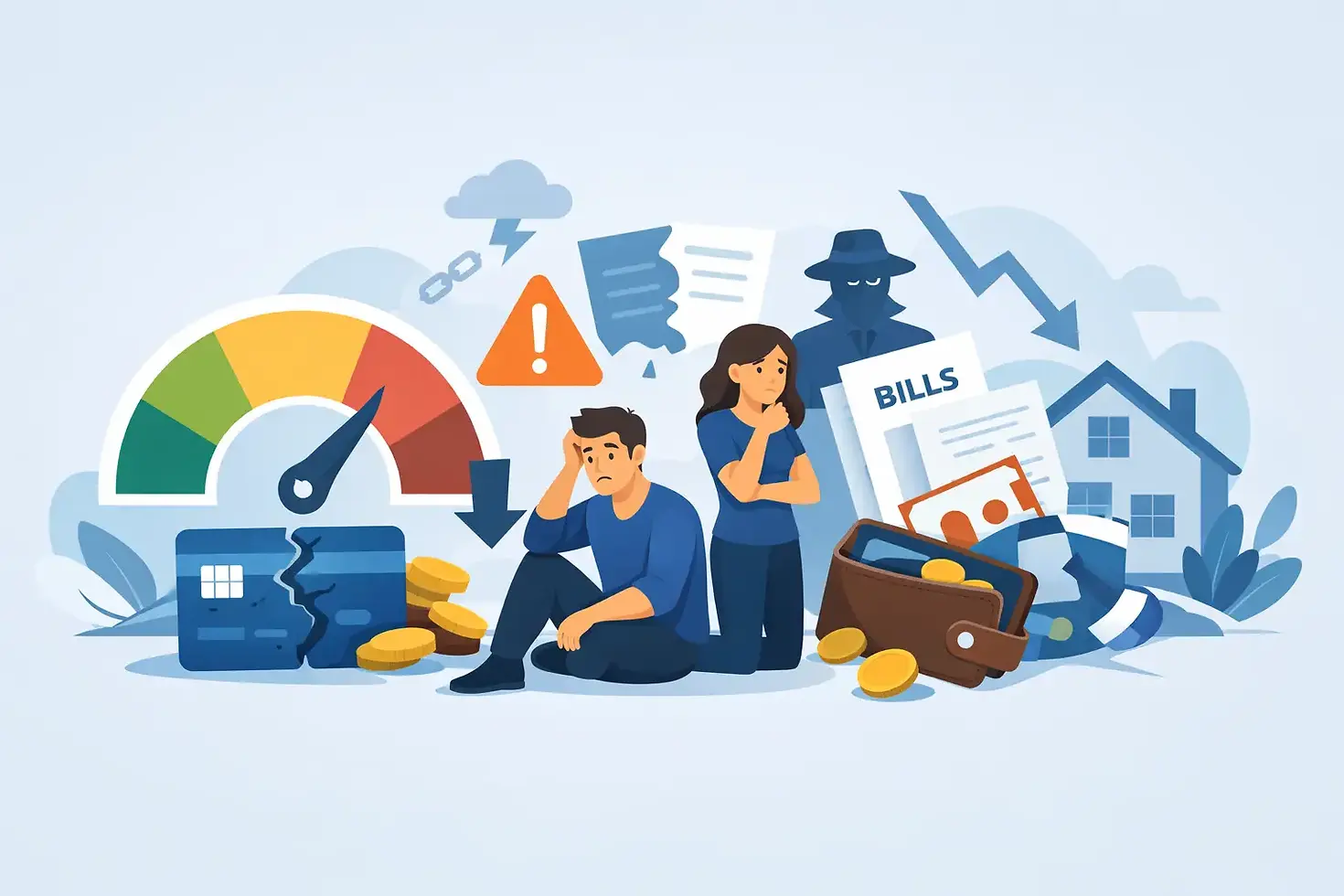
9 Top Mistakes Hurting Credit Scores
A lot of people think bad credit comes from one big financial mistake. Most of the time, that is not what happens. Credit gets damaged by small habits repeated over and over, and the top mistakes hurting credit scores are usually the same ones showing up month after month on real credit reports.
If you are trying to buy a home, qualify for a car, get approved for a decent credit card, or simply stop feeling judged by your score, you need to know what is working against you. This is not about theory. It is about the patterns that keep scores stuck low even when people are trying to do better.
The top mistakes hurting credit scores often look harmless
One reason credit problems drag on is simple - many score-dropping habits do not feel serious in the moment. A late payment by a few days might seem minor. Running up a card for one month might feel temporary. Applying for store credit to save 20% at checkout can seem smart.
But credit scoring does not care about your intentions. It reacts to what gets reported. That is why people can feel financially responsible and still watch their score slide.
The good news is that credit can improve when behavior changes consistently. The hard part is being honest about what is actually causing the damage.
Missing payments or paying late
This is still one of the biggest score killers, and it is more common than people admit. Payment history carries serious weight in your credit profile. Once a payment is 30 days late and gets reported, the damage can be real.
A lot of consumers think making a payment eventually is enough. It is better than not paying at all, but if the payment is late enough to hit your report, your score may already be taking the hit. One late payment may not ruin everything forever, but repeated late payments tell lenders that you are a risk.
If cash flow is tight, the smartest move is to protect minimum payments first. Not ideal, but better than letting accounts fall behind. Set reminders. Use autopay if you can manage it safely. If one bill gets paid late every few months, that pattern can cost you far more than most people realize.
Carrying high credit card balances
You can pay on time every month and still hurt your score if your balances are too high. This is where utilization comes in - how much of your available revolving credit you are using.
If you have a $1,000 limit and your balance is $800, that is high utilization. Even if you plan to pay it down soon, your score may drop when that balance is reported. This catches people off guard all the time.
High utilization does not always mean someone is irresponsible. Sometimes it means income got stretched, an emergency came up, or one card became the fallback. Still, scoring models usually read high balances as stress.
For many people rebuilding credit, this is one of the fastest areas to improve. Paying balances down before the statement closing date can help more than waiting until the due date. That timing matters.
Applying for too much credit too fast
When people want to fix their credit, they sometimes go into panic mode and apply for everything. Secured cards, retail cards, personal loans, buy now pay later accounts - one after another. That can backfire.
Each hard inquiry can affect your score, and too many new accounts in a short period can make lenders cautious. It can look like you are desperate for credit, even if your real goal is to rebuild.
There are times when opening a new account makes sense. If you have thin credit or need to lower utilization, the right account can help. But random applications are not a strategy. You want purpose, not motion.
Closing old credit cards too soon
People often close old cards thinking they are cleaning up their finances. Sometimes that is the right move, especially if a card has expensive fees or creates temptation. But from a credit score standpoint, closing an older card can hurt.
It may reduce your total available credit, which can raise your utilization. It can also work against the age and depth of your credit profile over time. That is why a card you never use can still be helping you quietly in the background.
This is one of those it depends situations. If a card comes with annual fees you cannot justify, keeping it open may not be worth it. But if the account is old, has no fee, and can be managed responsibly, closing it just because you do not use it anymore may not be the smartest move.
Ignoring errors on your credit report
A surprising number of people never check their reports until they get denied. By then, the damage may have been sitting there for months. Incorrect late payments, duplicate accounts, outdated balances, and accounts that do not belong to you can all create problems.
Bad information does not fix itself just because it is unfair. If it is reporting, it can affect your score. That means you need to review your reports carefully and challenge inaccurate information when necessary.
This is where discipline matters. Do not assume creditors always report perfectly. They do not. If you are serious about rebuilding, checking your reports needs to become normal, not something you only do after bad news.
Co-signing without understanding the risk
Co-signing is often done from a good place. You want to help a family member, friend, or partner get approved. But once you co-sign, that debt can affect your credit too.
If the other person pays late, runs up balances, or defaults, your score can suffer. The account may increase your debt load and impact how lenders view your obligations, even if you never use the account yourself.
A lot of people learn this lesson after the damage is already done. Helping someone is one thing. Taking on credit risk for them is another. If your own profile is already fragile, co-signing can set you back fast.
Letting collections sit without a plan
Collections can weigh down a credit profile and hurt approval odds, even when the score itself is not the only issue. Some people ignore collections because they feel overwhelmed. Others rush to pay everything immediately without understanding what result they are trying to get.
Not all collection situations should be handled the exact same way. The age of the debt matters. The reporting status matters. Your larger credit goal matters too. If you are preparing for a mortgage, your approach may differ from someone focused on rebuilding over the next year.
The mistake is not just having collections. The mistake is having no plan. You need to know which accounts are active, which are outdated, which need attention first, and what effect any action may have.
Maxing out one card while others stay empty
People often think overall utilization is the only thing that matters. It matters a lot, but individual card utilization can also be a problem. If one card is maxed out, that can still hurt your score even when your total usage across all cards looks decent.
This usually happens when one card becomes the everyday card while others are barely touched. The fix is not always opening more accounts. Sometimes it is simply spreading balances better or paying the heavy card down before it reports.
Credit scoring pays attention to patterns. A maxed-out card sends a message, even if the rest of your profile looks cleaner.
Living without a real credit strategy
This may be the biggest issue of all because it feeds the others. Too many people move through credit reacting instead of planning. They wait for a denial, then scramble. They see the score drop, then guess at a solution. They pay things in the wrong order, close the wrong account, or apply for credit out of frustration.
Strong credit usually comes from consistent, boring, disciplined behavior. That means knowing your due dates, tracking statement dates, watching utilization, checking reports, and making moves based on your goal.
If your goal is a mortgage, your strategy should reflect that. If your goal is recovering from a rough season, your approach may be different. Good credit is not built by random effort. It is built by informed effort.
How to stop the mistakes hurting your credit score
You do not need a perfect profile to make progress. You need fewer self-inflicted setbacks. Start by protecting on-time payments. Then get credit card balances under control, especially before statement dates. Review your reports, question errors, and stop applying for accounts without a reason.
Most importantly, stop treating credit like a mystery. It is a system, and systems reward consistency. Bright Lamont has built his message around that kind of disciplined credit education for a reason - results usually come when people stop guessing and start moving with intention.
Your score may not change overnight, but your habits can change today. And once your habits improve, your credit usually has a better reason to follow.


Comments